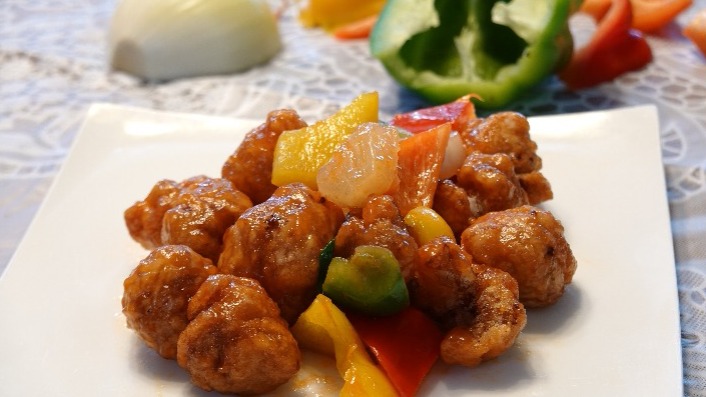
Sweet and Sour Pork
Introduction
Sweet and sour pork is one of the most popular dishes in Chinese cuisine and is favored by many due to its unique blend of tangy and sweet flavors paired with crispy and tender pork. This dish exemplifies the balance of taste and texture that is a hallmark of Chinese culinary art. Typically, sweet and sour pork consists of fried pork pieces that are coated with a vibrant sauce made from sugar, vinegar, ketchup, and sometimes fruit like pineapple, which adds an extra layer of sweetness and acidity.
History
The origins of sweet and sour pork can be traced back to the Tang Dynasty (618-907) in China. However, the dish as we know it today was greatly influenced by Guangdong cuisine, which became prominent in the late 19th and early 20th centuries. This style was brought to the West by Chinese immigrants, particularly those from Guangdong province, and it has evolved into a staple in Westernized Chinese cuisine. Over time, the dish has become a symbol of cultural fusion, adapting to local tastes across various countries while retaining its traditional roots.
Ingredients
The key components of sweet and sour pork include:
-
400g pork belly, cut into cubes
-
1 can of canned pineapple, cut into cubes
-
Half of each: red, green, and yellow bell peppers
-
1/2 piece onion, sliced
-
150g dried hawthorn berries, rinsed
-
200 ml water
-
150g corn starch
-
7 to 8 sections of scallion
-
700ml cooking oil
-
3 tablespoons corn starch mixture (2 teaspoons corn starch + 3 tablespoons water)
-
Marinade: 2 teaspoons light soy sauce, 2 teaspoons oyster sauce, 2 teaspoons granulated sugar, 2 teaspoons Shaoxing wine, and 1 beaten egg
-
Sauce: 3 tablespoons ketchup, 1 tablespoon lemon juice, 100ml water, and 3 teaspoons granulated sugar
These ingredients contribute to the dish's distinct balance of flavors, with the pork providing a savory base, the pineapple and bell peppers adding sweetness and acidity, and the sauce tying everything together with a glossy finish.
Preparation
Traditional Method
To prepare traditional sweet and sour pork, first, rinse and drain the pork belly cubes and marinate them with light soy sauce, oyster sauce, granulated sugar, and Shaoxing wine for 30 minutes. After marinating, add beaten egg and coat the pork cubes with corn starch. Fry them in hot oil until golden and crispy. Separately, sauté the onion, bell peppers, and scallion before combining them with pineapple in a wok. Mix the sauce ingredients and add to the vegetables, bringing it to a boil. Finally, add the fried pork cubes and the corn starch mixture to thicken the sauce, ensuring each piece is well coated. Serve immediately to enjoy the crisp texture and flavorful sauce.
Modern Variations
Modern variations of sweet and sour pork often incorporate additional elements to cater to diverse palates. Some recipes include different fruits like mango or lychee to introduce new flavor profiles. Others may substitute pork with chicken or tofu for dietary preferences. Additionally, healthier versions may involve baking the pork instead of frying or reducing sugar content in the sauce.
Cultural Significance
Sweet and sour pork holds a significant place in both traditional and contemporary Chinese cuisine. It is not only a dish enjoyed during major festivals like Spring Festival, but it also represents the adaptability of Chinese culinary practices as it has become a beloved dish worldwide. Its vibrant color and harmonious blend of flavors make it a popular choice for family gatherings and celebrations, symbolizing a blend of cultural heritage and modern culinary innovation.
International Popularity
Sweet and sour pork is a well-known dish in Chinese restaurants worldwide, especially in countries like the United States, the United Kingdom, and Australia. It is often adapted to suit local tastes, with variations such as the addition of different spices or a thicker sauce. Its widespread popularity highlights the global influence of Chinese cuisine and the dish's ability to transcend cultural boundaries.








